

Breeze Blocks and the Character Worth Saving
An old wall can be easy to overlook. Until someone decides it needs to go.
I recently came across a story out of Phoenix about a design firm rescuing midcentury breeze-block walls that were headed for the dump. It caught my attention because these are exactly the kinds of details I think deserve a second look before a renovation begins.
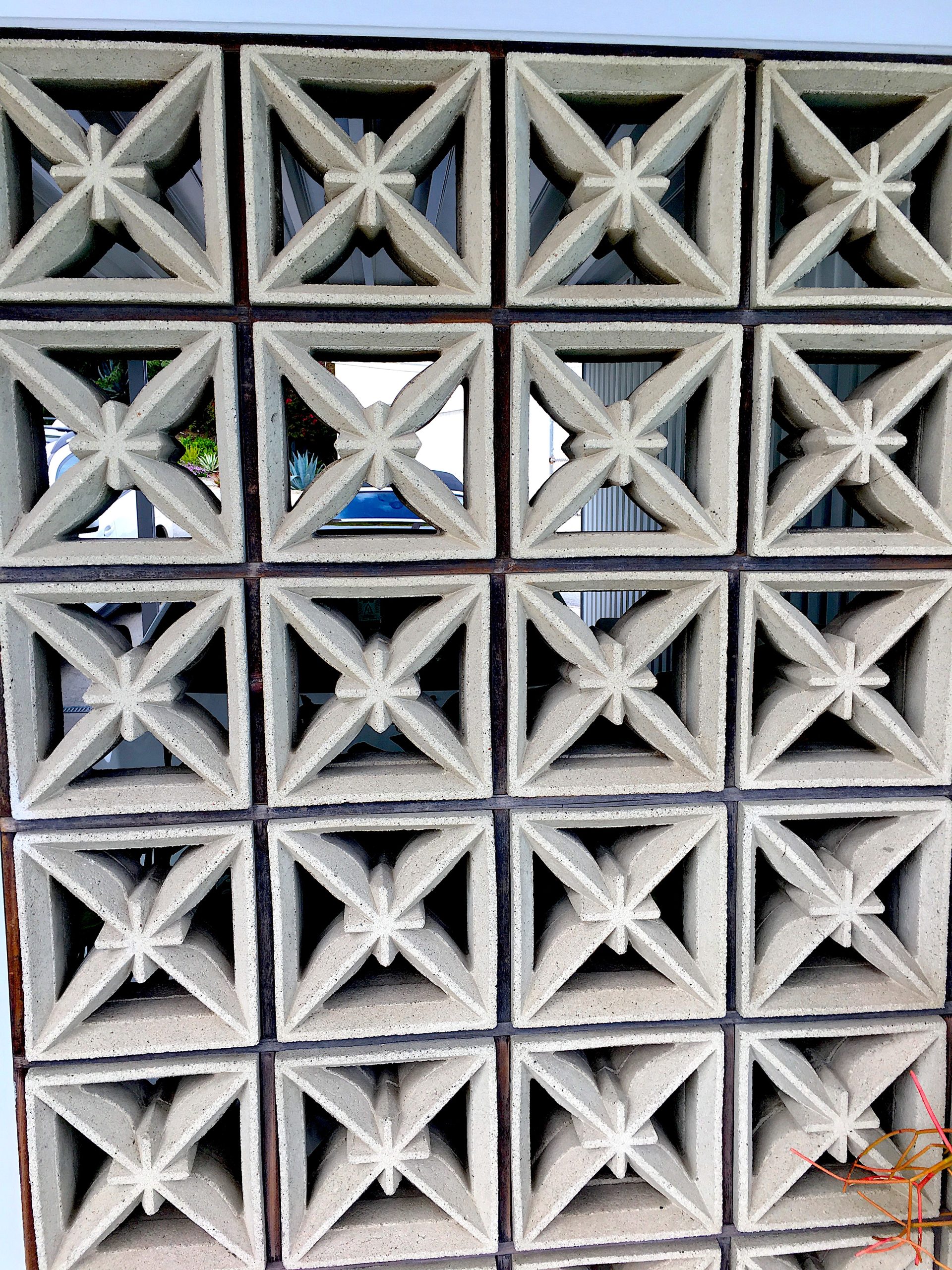
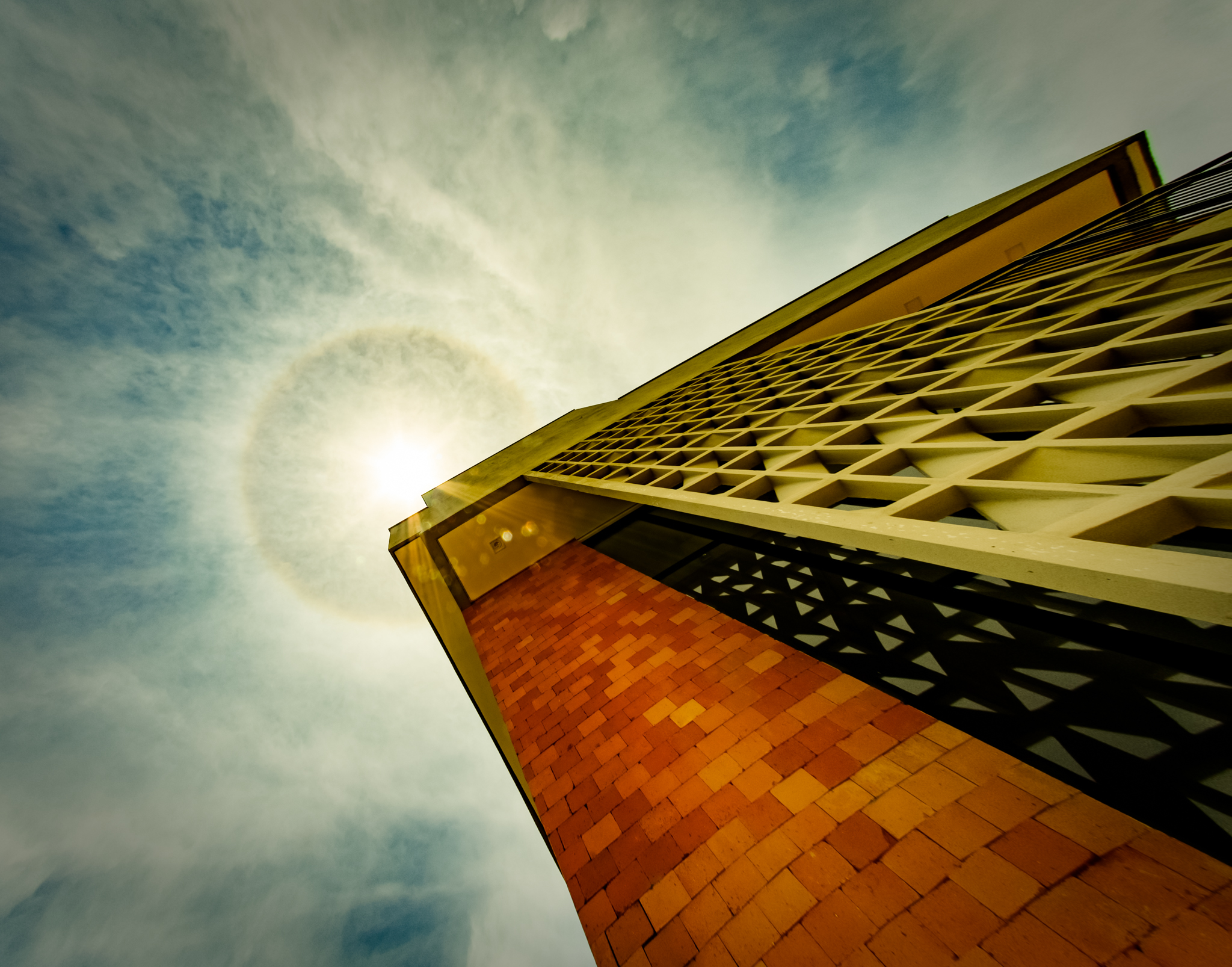
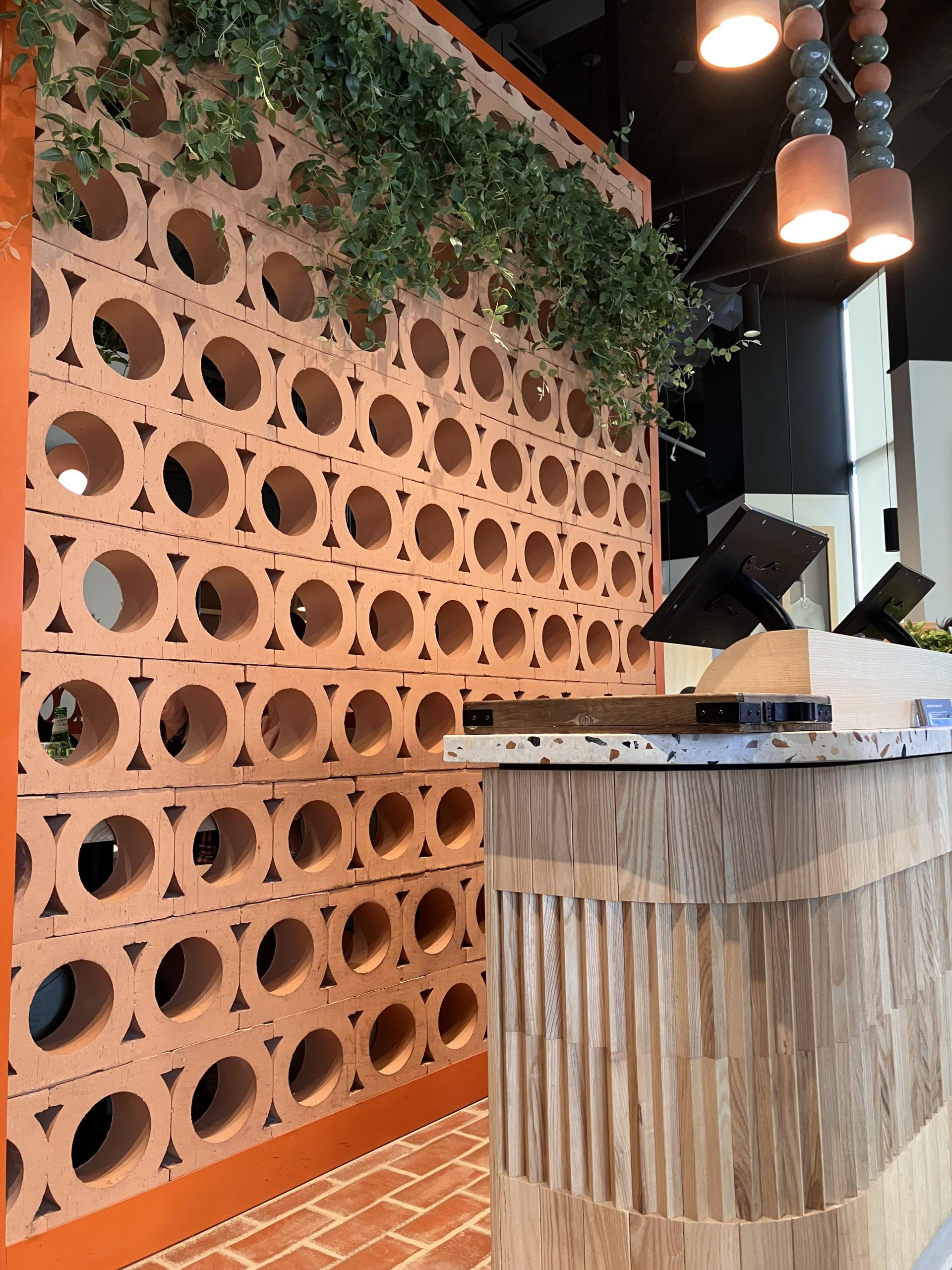
You probably know the blocks even if you have never known their name. They are the patterned concrete screens with openings through them, sometimes arranged in circles, sometimes in angular or flower-like shapes. One repeating shape becomes an entire wall. Add sunlight, and the shadows become part of the design.
According to reporting by Hailey Mensik of the Phoenix Business Journal, shared by ABC15, 180 Degrees Design + Build stepped in to salvage about 100 breeze-block walls. The firm is installing the rescued panels at locations around the Valley, including Phoenix Country Club, a new ChopShop restaurant, and a Chandler office building. The report places the effort within a broader local interest in reusing architectural components when entire buildings cannot be retained. Read the ABC15 story.
I am glad someone saw enough value in those walls to make the effort. It also made me want to learn more about how something so simple became such a recognizable part of midcentury architecture.
An old idea with a modern pattern
Architectural screens have a much longer history than their association with the 1950s might suggest. For centuries, builders used pierced stone, wood, and clay to shade and ventilate buildings in hot climates. Here in California, Frank Lloyd Wright and his son Lloyd experimented with perforated concrete blocks in the 1920s, including open screens and railings. Those early experiments helped establish possibilities that later designers would explore. Historical research by Anthony Rubano.
The familiar decorative breeze block is a concrete screen unit. Its openings allow air to pass through while the wall provides a measure of privacy and sun protection. These are generally nonstructural units, rather than the blocks carrying the weight of a house. Their purpose is to divide or shelter a space while keeping it open to the air. More about breeze blocks.
That is a thoughtful way to handle a patio or an entrance. You can create a sense of enclosure without completely shutting yourself away. And the pattern has a job to do beyond looking good.
How breeze blocks became part of California living
Architect Edward Durell Stone helped bring masonry screens to wide attention through his 1950s work, including the American embassy in New Delhi. By the late 1950s and 1960s, concrete screens were appearing across American homes and commercial buildings. Manufacturers promoted them heavily, with California producers placing material in publications such as Sunset and the Los Angeles Times. By the mid-1970s, their popularity had faded. Historical research by Anthony Rubano.
Southern California was an important center of production. Tesselle’s overview of Ron and Barbara Marshall’s book, Concrete Screen Block: The Power of Pattern, identifies the North Hollywood Concrete Tile Company among the manufacturers. Because the blocks were heavy, they were commonly produced and sold locally. That gives these seemingly ordinary walls a connection to the building trades and businesses of their own communities. More about screen-block history.

Finding breeze blocks for your home
If you have an original breeze-block wall, I would start by finding out whether it can be repaired. Photograph the pattern and measure the blocks, including their thickness. A similar-looking replacement may not be an exact match.
Whether you need a few replacement blocks or are planning something new, here are a few places to begin.
Look locally first. Facebook Marketplace can be a great place to look for original breeze blocks. Try searching “breeze blocks,” “screen blocks,” and “decorative concrete blocks” in Burbank, Glendale, and surrounding communities. Ask whether they are salvaged originals or newer leftover material. You might find the pieces needed to repair your wall—or save someone else’s unwanted blocks before they are discarded. I especially like that possibility.
Salvaged originals. Garden City Recycle & Salvage in San Jose lists breeze blocks among its reclaimed architectural materials. It is farther from our area, but a useful lead if you are searching for a particular pattern. Salvage inventory changes, so confirm availability, quantities, condition, and pickup or shipping arrangements before making plans.
Newly made blocks. ORCO Block & Hardscape offers patterns including La Costa, Square on Square, and Pinwheel. Its product pages include dimensions, and the company recommends checking physical samples for color and texture.
Tesselle offers a broad selection of newly made breeze blocks with nationwide delivery. Its collection is another useful place to explore patterns for an existing home or a new project.
More designs to explore. Breeze Blocks Malaysia has some wonderful designs, including Leaf, Seafoam, and Matrix patterns. The company is based in Malaysia, so this is also a resource for inspiration. If you are considering purchasing, confirm U.S. shipping availability and the full delivered cost directly with the supplier.
When shopping, ask whether a block is a salvaged original, a reproduction of a specific historic pattern, or a contemporary design. “Midcentury style” alone does not mean it will match your existing wall. Compare actual dimensions, thickness, and finish, and get a sample when possible.
Another perspective. I also enjoyed this post from Arch2O Magazine on Facebook. Its appreciation for these architectural details feels very much at home here in The Journal.
I like seeing these materials available again. A thoughtful new installation can carry the tradition forward. And sometimes, finding just a few matching blocks can help an original wall stay right where it belongs.
Before the wall comes down
My preference is to see original features remain where they belong whenever that is possible. A wall’s placement matters. It may have been designed to shelter a window, give privacy to a patio, or shape the approach to the front door. Moving it means losing some of that relationship, even when the material survives.
Still, I appreciate the practical response in Phoenix. When a wall is going to be removed, finding it another use gives the original material a future. I would like to see that possibility considered earlier, while there is still time to plan for it.
For a homeowner, the first step can be simply pausing before calling something dated. Find out what the feature is, why it was put there, and whether it can be retained. A familiar detail may be doing more for the home than you realize.
That is how I think about stewardship. The original fireplace matters. So does the kitchen tile. A modest patterned wall beside a driveway deserves consideration, too. I do not think a feature needs to be grand or expensive to earn our care.
The next time you pass a breeze-block wall, take a moment to look at it. Look at the pattern, the way it frames the space behind it, and what the light does as it passes through. There was thought behind that wall. I would hate to see it disappear before anyone noticed.
Sometimes stewardship begins with nothing more complicated than paying attention.
One of America’s earliest preservation stories—and one worth remembering
My wife recently told me that Mount Vernon may have been the first real example of historic home preservation and restoration in the United States. That sounded like exactly the kind of story I would love, so I wanted to find out more.
As it turns out, she had the heart of the story right, although the answer to whether it was truly the first is a little more complicated.
In 1850, New York State acquired the Hasbrouck House in Newburgh, where George Washington had lived during the final part of the Revolutionary War. It became the first publicly operated historic site in the country.
Mount Vernon was something different. It inspired what is generally considered America’s first nationwide preservation campaign, led by the country’s first national historic-preservation organization.
More interestingly, it was done by a group of women at a time when women had very little formal political power.
By the early 1850s, Mount Vernon was in serious disrepair. The property had stayed in the Washington family, but it was becoming increasingly difficult and expensive to maintain. The mansion was deteriorating, the grounds were overgrown and there was a real possibility that the estate could eventually be lost.
In 1853, Louisa Bird Cunningham was traveling along the Potomac River when she saw Mount Vernon in the moonlight. She was disturbed by its condition and later wrote to her daughter, Ann Pamela Cunningham. Her thought was simple: if the men of the country were not going to save Washington’s home, perhaps the women should.
I love that part of the story. Her daughter did not simply agree with her. She acted on it.
Ann Pamela Cunningham began writing about the plight of Mount Vernon under the name “A Southern Matron.” She appealed first to women in the South and eventually to women throughout the country. Her campaign became the Mount Vernon Ladies’ Association of the Union.
The Association tried to persuade Congress or the Commonwealth of Virginia to purchase the property. Neither one did.
So the women decided to raise the money themselves.
They created a national network with representatives in states across the country. Membership cost one dollar, although smaller donations were also welcomed. They held fairs and community events and published a newsletter called The Mount Vernon Record. Edward Everett, a former United States senator and a well-known speaker at the time, reportedly gave his lecture about George Washington 139 times to help raise money.
It must have seemed nearly impossible. They were trying to raise $200,000 in the 1850s, with the country moving closer to the Civil War.
But they did it.
In 1858, the Association signed an agreement to purchase the mansion and 200 acres from John Augustine Washington III. It made an $18,000 down payment and continued raising the rest. In the summer of 1860, the Mount Vernon Ladies’ Association took possession of the estate.
One of my favorite parts of this story is that the women did not save only the mansion and Washington’s tomb. They also protected the outbuildings, gardens, fields and much of the surrounding landscape.
A home does not exist entirely by itself. Its setting is part of its character and part of its story. The smaller buildings at Mount Vernon help us understand how the property actually worked in a way the mansion alone never could.
Because those buildings survived, Mount Vernon now has what the National Park Service describes as the largest remaining collection of eighteenth-century plantation outbuildings in the country.
The women were figuring out preservation as they went along. There were no generally accepted restoration standards and there was no established profession they could turn to for guidance. Their basic goal was to return Mount Vernon to the way it looked when Washington lived there.
Not every early decision was historically correct. Rooms have been repainted and refurnished more than once as researchers have uncovered new evidence. Gardens and outbuildings have also been reconsidered and, in some cases, reconstructed.
Sometimes preservation works that way. First, you save the place. Then you continue learning from it.
Preserving Mount Vernon also meant preserving a plantation. At the time of Washington’s death in 1799, 317 enslaved people lived on the estate. They farmed the land, cooked, practiced skilled trades, maintained the household and performed much of the work that made Mount Vernon possible.
For many years, the interpretation of Mount Vernon focused primarily on Washington and the estate as a patriotic shrine. Today, archaeology, historical records, surviving workspaces and quarters, and the work of descendants are helping to tell a more complete story of the people who lived and labored there.
That is important. Saving a building does not automatically guarantee that its complete story will be told. It does, however, preserve the physical evidence that allows later generations to keep asking questions and improve our understanding of what happened there.
This is where the story of Mount Vernon starts to feel more personal to me.
I spend a lot of time looking at older homes around Burbank, Glendale, Pasadena and the surrounding communities. They may not have been owned by a president or connected to a nationally important event, but they help tell the story of how our own communities developed.
I also see how quickly the details that give these homes their identity can disappear. Original windows, doors, woodwork and tile are often treated as problems simply because they are old. Sometimes they do need repair or replacement. But sometimes removing them is simply the easiest choice, without much thought given to what will be lost.
I am not suggesting that every old home should be turned into a museum. Homes need to work for the people who live in them.
My own home in Burbank is a fairly modest original Baby Benmar. It is certainly not Mount Vernon, but my wife and I have tried to preserve or recreate its original look and feel. We do that because we like what the house is. We never wanted to remove its character and then try to add some artificial version of it back later.
I feel the same way about vintage cars. My 1958 MGA is not interesting to me simply because it is old. It is interesting because it still looks and feels like an MGA. Repairs and even certain modifications can be made without taking away the things that give it its identity.
Old homes are much the same. Change is not the enemy of preservation. Thoughtless change is usually the bigger problem.
The Mount Vernon Ladies’ Association still owns and maintains the estate more than 160 years later. Its work did not end when the purchase was completed. Every generation since has inherited new repairs, new discoveries and new questions about what should be preserved and how the history should be presented.
What I keep coming back to is how the entire effort began. A woman saw a neglected home from a boat and told her daughter that someone needed to save it. Her daughter decided that it should not be lost, and thousands of other people eventually helped her.
That may be how preservation usually begins—not with an official designation or a plaque, but with someone recognizing that a place contains something worth carrying forward.
We don’t inherit great homes from the past. We borrow them from the future.
A Few Sources I Used
- Early History of the Mount Vernon Ladies’ Association
- Ann Pamela Cunningham — National Park Service
- The American Preservation Movement’s Founding Mother
- Preservation of Mount Vernon — National Park Service
- Featured image: Mt. Vernon, photographed between 1859 and 1860 — Library of Congress. No known restrictions on publication.

From a river-rock bungalow in Stonehurst to a Spanish Revival waiting to be restored, seven Southern California homes with something worth noticing.
Finding an older home with genuine character for less than $1 million is not easy in Southern California—but it is still possible if you know where to look and can recognize what is worth preserving.
Affordable History is a recurring look at historic, vintage, and character-rich homes throughout the Verdugos, Foothills, and surrounding communities. Some are beautifully preserved. Others have evolved thoughtfully, or are waiting for someone with the vision to bring them back.
The name is not meant to suggest that these homes are inexpensive, or that every house featured has a formal historic designation. It is about looking for places where age, architecture, craftsmanship, or possibility can still be found below the million-dollar mark. What connects these seven homes is not perfection. It is that each still has something worth seeing.
OPEN THIS WEEKEND · SEPTEMBER 5–6
590 Prescott Street
Saturday, 12–3 PM
956 E Villa Street
Saturday and Sunday, 2–4 PM
245 Laun Street
Saturday, 2–4 PM
Open-house schedules can change. Please confirm the current time on the individual listing page before visiting.
ONE
Character You Can Live With Now

SUN VALLEY · RIVER-ROCK BUNGALOW
11103 Allegheny
$899,000 · 3 beds · 1 bath · 693 sq. ft. · Listed as built in 1928
Few houses announce their material story as clearly as this one. The river-rock walls, chimney, low profile, and deep porch give the house a handmade quality that feels inseparable from Stonehurst, a neighborhood known for its distinctive stone construction. The bungalow is compact, but it sits on nearly a third of an acre, giving the property a scale that the interior square footage alone does not convey.
It is not a polished showpiece, and that is part of its appeal. The irregular stonework and modest proportions make it memorable. This is the sort of house that deserves curiosity, research, and a careful hand before anyone decides what should change.
Listing Agent: James Sanchez · Listing Office: Time To Sell Realty
MLS #SR26186427

PASADENA · EARLY-TWENTIETH-CENTURY CHARACTER
956 E Villa Street
$998,000 · 2 beds · 1 bath · 1,132 sq. ft. · Built in 1907
This 1907 home offers a quieter kind of preservation. Its welcoming porch and Craftsman-era proportions establish the character from the street, while the interior carries the story through hardwood floors, original built-ins, a bay window, and a window seat in the dining room.
The house has also been allowed to evolve. The kitchen has been refreshed, and important systems have received attention, without stripping away the details that give the rooms their identity. For someone who loves older homes but is not looking for a major restoration project, this may be one of the most approachable houses in the group.
Listing Agent: Kerry Jackson · Listing Office: Coldwell Banker Realty
MLS #P1-28615

PASADENA · TRADITIONAL BUNGALOW
590 Prescott Street
$960,000 · 2 beds · 1 bath · 1,072 sq. ft. · Built in 1938
Full disclosure: this one is my listing, and it belongs here for the same reason I was drawn to represent it. From the street, the 1938 bungalow is quiet and understated. Inside, it is the accumulation of surviving details that makes the house special: original hardwood floors, the fireplace and mantel, the dining-room doorbell and chimes, and a remarkably intact kitchen with its period stove and original salt-and-pepper shakers.
Located within Pasadena’s Craftsman Heights Landmark District, Prescott is a reminder that character does not require grandeur. Sometimes it lives in the ordinary things that generations of owners simply chose not to remove.
Listing Agent: Stefan Doomanis · Listing Office: Coldwell Banker Envision
MLS #BB26178879

ALTADENA · POSTWAR TRADITIONAL
245 Laun Street
$999,000 · 3 beds · 2 baths · 1,598 sq. ft. · Built in 1947
Laun sits at the later edge of the history represented in this first edition. It is not being presented as a time capsule or a formally historic property. Its appeal is the balance between its postwar Traditional character and the practical work that has already been completed.
The brick chimney, front bay, defined rooms, plantation shutters, and fireplace still give the house a clear identity. Newer windows, updated bathrooms, a newer roof, and an updated electrical panel make it easier to imagine living here now. Stewardship does not always mean returning a house to an earlier moment. Sometimes it means allowing it to keep evolving without making it ordinary.
Listing Agent: Cariy Hernandez · Listing Office: Keller Williams Realty
MLS #P1-28541
TWO
Waiting for the Right Vision
The final three homes ask more of their next owners. They are not simply opportunities to choose finishes. Each requires someone prepared to understand the building, the work, and the consequences of the decisions ahead.

PASADENA · SPANISH REVIVAL
1791 Navarro Avenue
$999,900 · 3 beds · 1 bath · 1,665 sq. ft. · Built in 1932
Of the restoration candidates in this group, this may be the most architecturally legible. The simple stucco walls, clay-tile roof, recessed entry, and steel windows still read unmistakably as a 1932 Spanish Revival home. Time and deferred care are visible, but the essential language of the house has not been designed away.
The approximately 10,000-square-foot lot adds possibility, but the house itself should remain the starting point. This is not a project to approach casually. Inspections, repair costs, and any previous alterations deserve careful investigation. For the right buyer, though, the opportunity is not to invent character. It is to uncover and strengthen what is already there.
Listing Agent: Sebastian Stofenmacher · Listing Office: Edgestone Real Estate, Inc.
MLS #PW26190549

PASADENA · RESTORATION OPPORTUNITY
1622 Navarro Avenue
$899,000 · 4 beds · 3 baths · 1,838 sq. ft. · Built in 1920
The broad front porch and second-story balcony give this 1920 house a presence that survives even though the building has clearly changed over time. Its four-bedroom layout and 1,838 square feet offer more room than many older homes below this price point, but the listing also makes clear that repairs and updating are needed.
This appears to be more than a cosmetic project, and that makes the early decisions especially important. Which features belong to the original house? Which later layers have earned their place? Not every old home should be forced back to a single year. A thoughtful renovation can respect the building’s age while still allowing it to become a practical home for its next chapter.
Listing Agent: Sabrina Cole · Listing Office: Keller Williams Realty College Park
MLS #CV26187572

GLENDALE · STUDS-OUT RESTO!
3115 Piedmont Avenue
$780,000 · 3 beds · 1 bath · 1,130 sq. ft. · Built in 1940
Piedmont has the lowest asking price in this edition, but it is also the most demanding project. The interior has been stripped to the framing, so this is closer to a rebuild than a conventional fixer. Cash, hard-money, or construction financing may be required, and the true cost cannot be understood from the asking price alone.
Yet the 1940 exterior still offers a useful starting point: a low roofline, projecting bays, modest scale, and a comfortable relationship to the street. With so little interior finish left to preserve, stewardship here means resisting the temptation to turn the house into a generic product. The opportunity is to rebuild thoughtfully around the proportions and identity that remain.
Listing Agent: Ed Sanchez · Listing Office: EMPOWER Real Estate
MLS #BB26191686
Seven homes, and seven very different definitions of value. Some offer original details that have quietly survived. Some show how an older house can be updated without losing itself. Others need a new owner prepared to make difficult and consequential choices.
That range is the point of Affordable History. Finding a home with character is not only about identifying an architectural style or a construction date. It is about looking closely enough to see what is there, what has been lost, and what might still be carried forward.
LOOKING FOR A HOME WITH CHARACTER?
Tell me what is worth finding.
If one of these homes speaks to you—or you would like a search built around a particular neighborhood, era, or architectural style—I would be glad to help you look more closely.
Listing information was current as of September 3, 2026, and is deemed reliable but not guaranteed. Prices, availability, property details, and open-house schedules are subject to change. Buyers should independently verify all information and investigate property condition, permits, historic status, financing requirements, and other matters that may affect a purchase.
Why the Details Matter
Sometimes the smallest things tell you the most about a house.
Walk through an older home and it's easy to focus on the obvious things—the architecture, the floor plan, the size of the rooms. But I'm often drawn to something smaller.
An original light fixture. A piece of tile. Old hardware. A built-in cabinet. Even something as ordinary as a recipe permanently fired into the kitchen tile.
Almost none of these details are essential. A house would function perfectly well without them. But remove enough of them, and something begins to disappear. They are part of what tells us when a home was built, how people lived there, and what someone once thought was worth making beautiful.
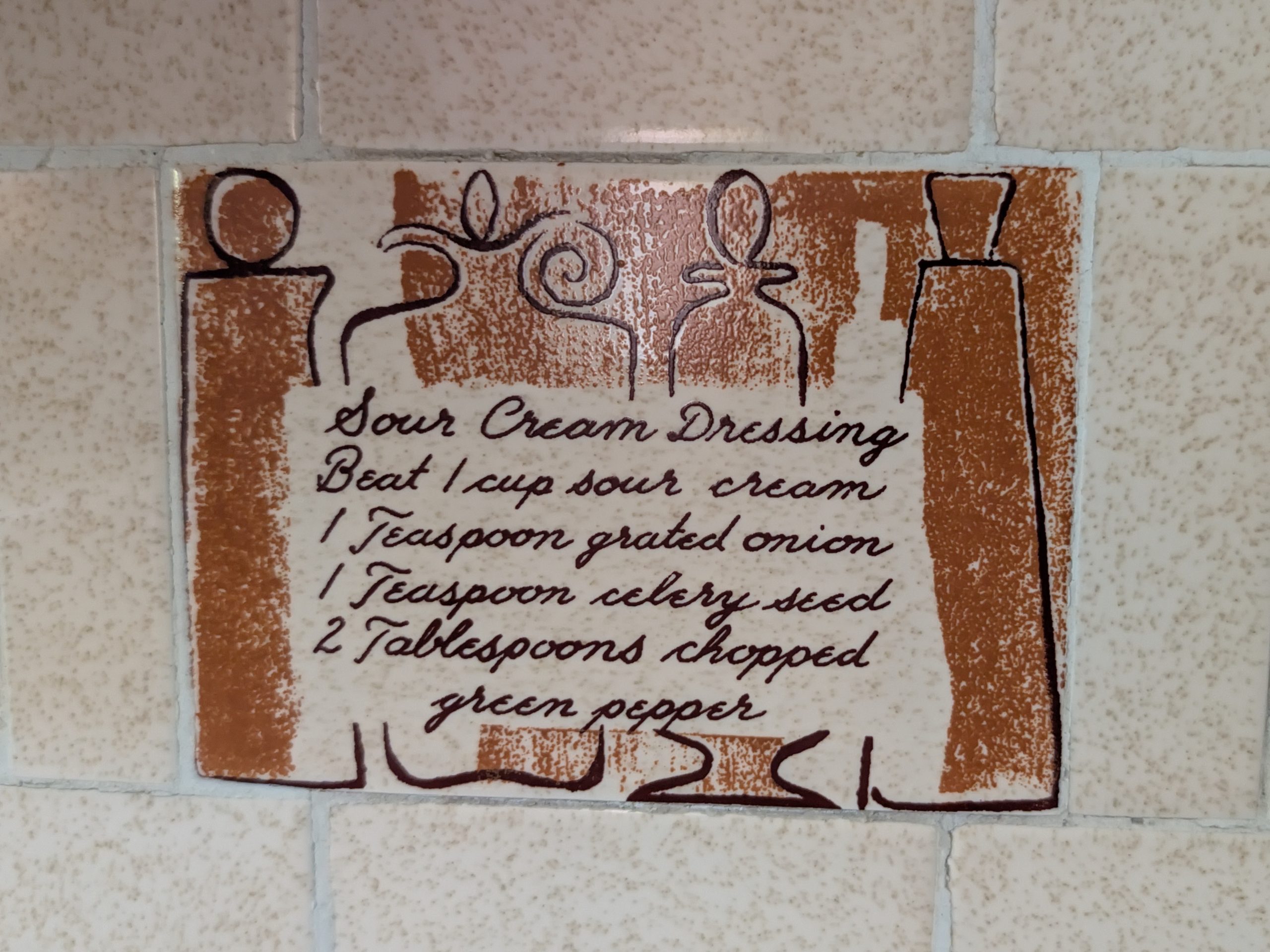
Instead, it survived.
This little recipe could easily have disappeared during any number of kitchen updates. Someone could have decided it was dated, odd, or simply in the way.
Instead, it survived.
And that's what interests me. Not because every old detail needs to be preserved forever, but because once something original is removed, we usually can't get it back. A reproduction may look right. It may even be beautifully made. But it doesn't carry quite the same connection to the people who chose it, used it, and lived with it.
That's why I think it's worth pausing before we automatically replace the unusual, imperfect, or unfashionable parts of an older home. Sometimes those are precisely the things that make the house worth remembering.
Old doesn't have to mean untouched.
Homes are meant to be lived in, and every generation leaves something behind. Systems need updating. Rooms need to function differently. Materials wear out.
Preservation isn't about refusing change. It's about knowing enough to recognize what you're changing—and deciding whether something that has survived for decades deserves to survive the next decision, too.
Sometimes the answer will be no. But I think it's a question worth asking.
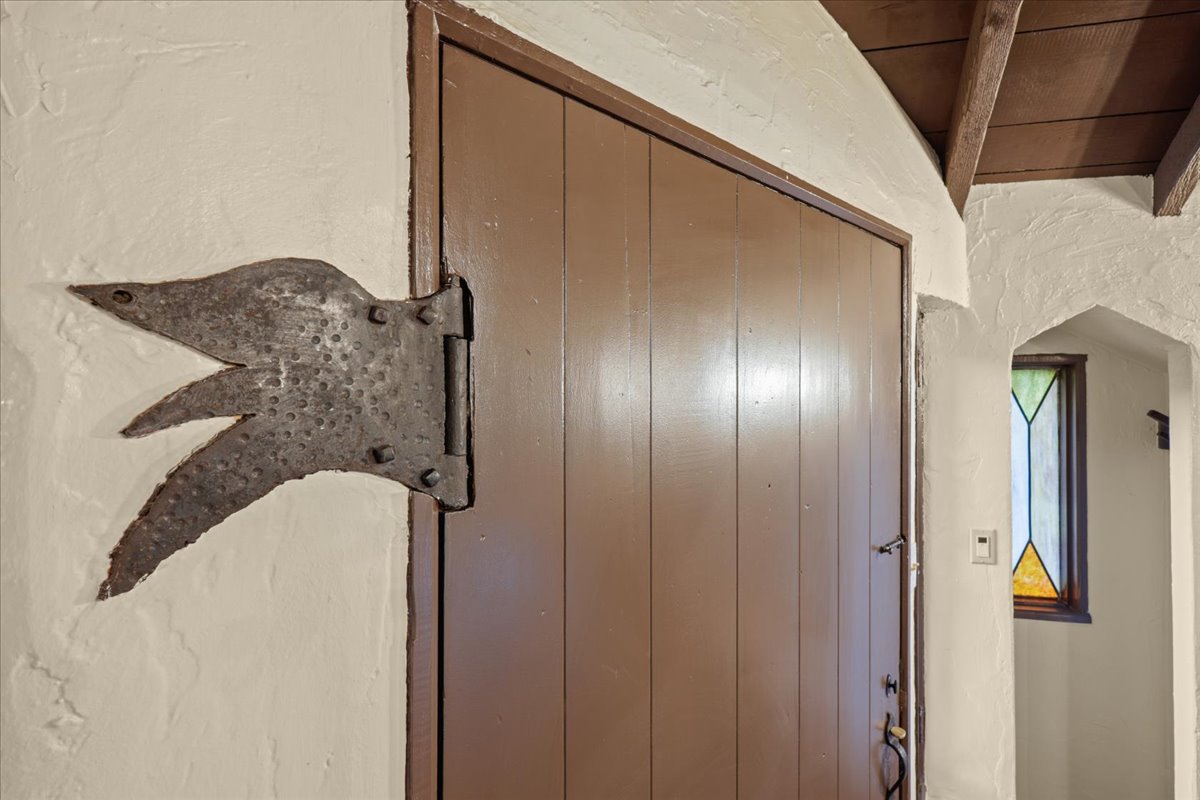
Look first. Then decide.
The details that give a home its character are often the easiest things to overlook—and sometimes the easiest things to lose.
I don't believe every old thing needs to stay simply because it's old. But before something disappears, I think it's worth understanding why it was there, what it contributes, and whether losing it changes something about the house that can't quite be put back.
Sometimes stewardship begins with nothing more complicated than paying attention.
